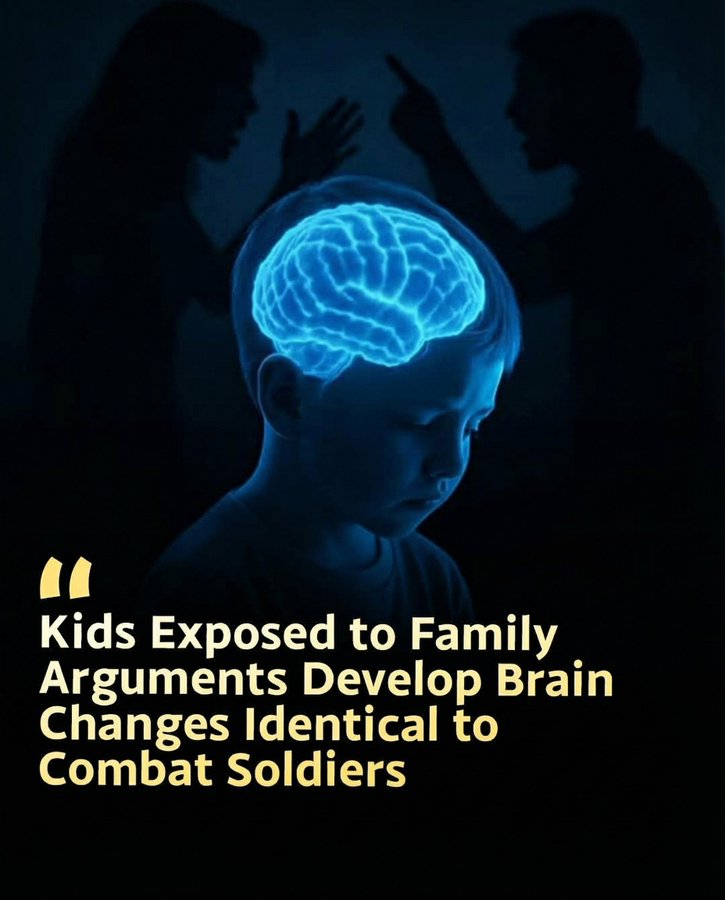
🧠大喊大叫不仅仅是大喊大叫。在孩子的脑海里,它是一种威胁。神经科学表明,大脑并不能清晰地区分生理危险和心理危险。核磁共振扫描显示,在充满冲突的家庭环境中长大的孩子会发展出过度敏感的威胁反应,这种反应与患有创伤后应激障碍(PTSD)的士兵的反应非常相似。大脑的反应并非基于意图,而是基于强度。这种反应的核心是杏仁核,大脑的警报系统。对于经常遭受叫喊、敌意或不可预测环境影响的儿童来说,杏仁核会一直处于高度警惕的状态。它会不遗余力地扫描危险,即使实际上并无危险。原本应该是安全的地方,在神经系统中却被编码为战场。这种慢性压力并不局限于情绪层面。它会重塑大脑发育,影响注意力、情绪调节、记忆力和冲动控制能力。随着时间的推移,神经系统会适应所处环境,使孩子做好防御的准备,而不是学习或建立人际关系。悲剧在于,这种重塑过程悄无声息地发生。无需任何伤痕,也无需任何单一的创伤事件。反复接触敌意就足以造成这种结果。大脑会逐渐明白,平静并不安全,危险随时可能爆发。充满敌意的家庭环境不仅仅会伤害孩子的感情,它还会让孩子的神经系统在他们真正理解战争是什么之前,就已开始为战争做好准备。🧠 Yelling isn’t just yelling. To a child’s brain, it’s a threat.Neuroscience shows that the brain doesn’t neatly separate physical danger from emotional danger. MRI scans reveal that children raised in high-conflict homes develop hyper-reactive threat responses that closely resemble those seen in soldiers with PTSD. The brain reacts not to intent, but to intensity.At the center of this response is the amygdala, the brain’s alarm system. In children exposed to frequent yelling, hostility, or unpredictability, the amygdala remains stuck in a state of constant vigilance. It scans relentlessly for danger, even when none is present. What should be a place of safety becomes neurologically coded as a battlefield.This chronic stress doesn’t stay confined to emotions. It reshapes how the brain develops, affecting attention, emotional regulation, memory, and impulse control. Over time, the nervous system adapts to survive the environment it’s in, preparing the child not for learning or connection, but for defense.The tragedy is that this rewiring happens silently. No bruises are required. No single traumatic event is necessary. Repeated exposure to hostility is enough. The brain learns that calm is unsafe and that danger can erupt at any moment.A hostile home doesn’t just hurt feelings. It trains a child’s nervous system for war, long before they understand what war even is.